
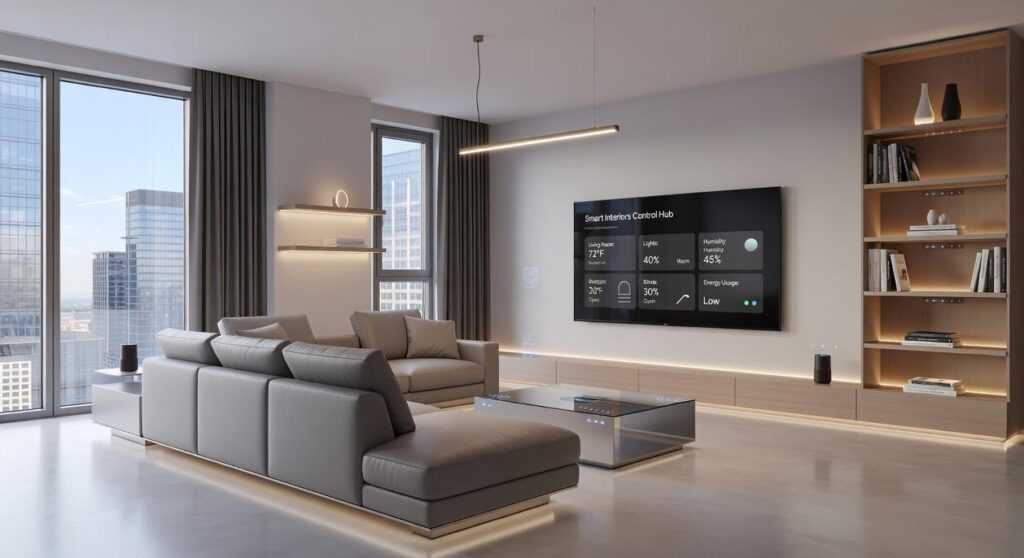
If you’re searching for a practical way to simplify your smart home setup, streamline device integration, and understand how automation protocols actually work together, this connected living guide is built for you.
Smart home technology is evolving fast. New devices, platforms, and standards promise seamless integration—but without clear direction, it’s easy to end up with disconnected systems and unnecessary complexity. This article cuts through the confusion by breaking down home trends, smart interior innovations, connected living basics, and the essential steps for making your devices communicate efficiently.
We’ve analyzed the latest developments in automation protocols and real-world device compatibility to ensure the guidance here reflects what works today—not outdated setups or theoretical configurations. Whether you’re upgrading a single room or building a fully integrated smart home ecosystem, you’ll find clear, actionable insights designed to help you make confident, future-ready decisions.
From Smart Gadgets to a Truly Intelligent Home
Sick of juggling five apps just to dim the lights? You’re not alone. Many homes are packed with “smart” devices that refuse to talk to each other (like coworkers on a silent retreat). The result?
• Constant notifications
• Clunky automations
• Wi-Fi meltdowns at the worst moment
A truly intelligent home connects systems through shared protocols—common languages like Matter or Zigbee that let devices coordinate. Critics say complexity isn’t worth it. Fair. But fragmentation is worse. This connected living guide shows how thoughtful integration creates routines that actually simplify mornings and evenings. Pro tip: start with one ecosystem, then expand.
What is interconnected living? It’s a home where devices don’t just connect to the internet, but to each other. To make sense of it, let’s break down four pillars.
First, centralization means giving your home a “brain.” This could be a smart speaker, display, or dedicated server. Instead of juggling a dozen apps, everything flows through one hub. Think of it like a conductor leading an orchestra (no more solo acts).
Next, communication refers to the languages devices use. Wi-Fi is common, while Zigbee and Z-Wave are low-power networks built for smart gadgets. Matter is a newer standard designed to unify them. In simple terms, these protocols let devices “talk” reliably.
Then, automation goes beyond remote control. Turning on lights from your phone is convenient; having them switch on when you arrive is true automation.
Finally, personalization means creating scenes and routines. A “Good Morning” scene might raise blinds, start coffee, and play music. For a deeper dive, explore this connected living guide and see practical examples at Smart Home Basics.
Ultimately, interconnected living simply means your home responds intelligently, saving time, energy, and a few everyday headaches along the way. Clarity turns complexity into comfort at home. Today.
Building Your Ecosystem: A Practical Guide to Device Integration
Start With Your “Why”
Before buying anything, pause. What’s your biggest daily friction point? Is it fumbling for lights at night, worrying about security, or wasting energy while you’re away? Define your goal first. In 2024, after three months of testing different setups in a small apartment, one thing became clear: random gadgets create clutter, not convenience. Purpose creates power.
Some argue smart homes are just expensive toys (and yes, a voice-controlled toaster might be pushing it). However, when your system solves a real problem—like reducing phantom energy draw by up to 10% according to the U.S. Department of Energy—it becomes practical, not flashy.
Choosing Your Platform
Next, pick your ecosystem carefully. The big three:
- Google Home: Strong AI and cross-device compatibility
- Apple HomeKit: Privacy-focused, tight iOS integration
- Amazon Alexa: Broad device support and routine flexibility
Look for the “Works With” label to ensure compatibility. Pro tip: Stick to one primary platform at the start—mixing ecosystems too early is like assembling IKEA furniture without the manual.
For a foundational checklist, review the essential devices for connected living setup before purchasing.
The “Three-Device” Rule
Start simple:
- Motion sensor
- Smart plug
- Lamp
When motion is detected, the lamp turns on. That’s automation—devices communicating within your connected living guide framework.
Create IFTTT Routines
“If This, Then That” (IFTTT) means one action triggers another automatically. Examples:
- If my smart lock unlocks after 10 PM, turn on entry lights and send a notification.
- If indoor temperature exceeds 75°F, activate smart fan.
- If no motion for 30 minutes, turn off living room devices.
- If garage opens, switch on pathway lights.
Critics say routines are overkill. Yet over time, small automations compound—saving minutes daily, hours monthly, and frustration indefinitely.
Smart Interior Innovations: Blending Technology with Design

Invisible Tech: Seamless vs. Statement
When it comes to smart homes, there are two camps: show it off or blend it in. Statement tech—like visible hubs and flashy control panels—can feel futuristic (very sci-fi chic). But seamless integration often wins in modern interiors.
Standard switches vs. smart switches that mimic traditional toggles. The latter preserve your aesthetic while adding automation.
Standalone speakers vs. in-ceiling speakers. One takes shelf space; the other disappears into architecture.
Curtains vs. motorized blinds hidden within frames. Same function, dramatically different visual impact.
The goal? Technology that works hard without looking busy.
Dynamic Lighting: Basic Bulbs vs. Tunable Systems
A simple smart bulb lets you turn lights on with your phone. A tunable white and RGB system adjusts color temperature throughout the day—cool light in the morning, warm hues at night—to support circadian rhythms (your body’s internal clock). Research from Harvard Health notes that blue-enriched light boosts alertness, while warmer tones support relaxation.
Basic control changes convenience. Dynamic lighting changes mood, focus, even sleep quality.
Multi-Functional Furniture: One Job vs. Many
Traditional furniture serves a single purpose. Smart furniture multitasks.
A side table with built-in wireless charging eliminates cable clutter.
An air purifier disguised as decor cleans air without screaming “appliance.”
Connected kitchen appliances integrated into cabinetry keep lines clean and workflows efficient.
(Think of it as Marie Kondo meets Silicon Valley.)
Future-Proofing: Now vs. Later
Renovating? Run ethernet cables and install extra outlets now. Opening walls twice is costly and disruptive. Following a connected living guide ensures your infrastructure supports tomorrow’s devices without tomorrow’s headaches.
Pro tip: Conduit tubing inside walls makes future cable upgrades far easier.
Your First Step Towards a Smarter, More Connected Life
You’ve seen the bigger picture: the goal isn’t to collect smart gadgets like they’re Pokémon cards. It’s to build a unified system that saves time and reduces everyday friction (because no one wants to argue with a light switch at 11 p.m.).
The core principle is simple: a successful connected home relies on seamless device communication and meaningful automation. Device communication means your products share data through common protocols like Wi‑Fi, Zigbee, or Matter, so they work together instead of operating in silos. Automation is when devices trigger actions automatically—like lights dimming and doors locking at bedtime—without you lifting a finger.
Here’s your action plan:
- Pick one daily annoyance (dark hallways, forgotten locks, inconsistent thermostat settings).
- Apply the Three-Device Rule: connect a sensor, a smart device, and a control hub or app.
- Build one simple automation this week.
For example, a motion sensor + smart bulbs + your hub can create hands-free lighting after 9 p.m. Small setup, big payoff.
If you want structured direction, start with a practical connected living guide to map compatible devices and protocols.
This first win builds confidence. Once you experience automation that genuinely improves your routine, expanding your system becomes intentional—not overwhelming. And that’s when connected living starts to feel less like tech… and more like relief.
Bring It All Together with Smarter Connected Living
You came here looking for clarity on how to simplify your home with smarter technology—and now you have a clear path forward. From understanding automation protocols to integrating devices seamlessly, you’re better equipped to create a home that works for you, not against you.
The real frustration isn’t a lack of devices—it’s the confusion, incompatibility, and wasted money that come from poor planning. A well-designed system eliminates those headaches and gives you convenience, efficiency, and control in one streamlined setup.
Now it’s time to take action. Use this connected living guide to evaluate your current setup, identify gaps, and upgrade with intention. Don’t let disconnected devices limit your home’s potential.
If you’re ready to simplify your smart home and make every device work together flawlessly, start implementing these strategies today and transform your space into the seamless, connected home you’ve been wanting.
 There is a specific skill involved in explaining something clearly — one that is completely separate from actually knowing the subject. Arthuron Grantielos has both. They has spent years working with home trends update in a hands-on capacity, and an equal amount of time figuring out how to translate that experience into writing that people with different backgrounds can actually absorb and use.
Arthuron tends to approach complex subjects — Home Trends Update, Device Integration Tips, Home Automation Protocols being good examples — by starting with what the reader already knows, then building outward from there rather than dropping them in the deep end. It sounds like a small thing. In practice it makes a significant difference in whether someone finishes the article or abandons it halfway through. They is also good at knowing when to stop — a surprisingly underrated skill. Some writers bury useful information under so many caveats and qualifications that the point disappears. Arthuron knows where the point is and gets there without too many detours.
The practical effect of all this is that people who read Arthuron's work tend to come away actually capable of doing something with it. Not just vaguely informed — actually capable. For a writer working in home trends update, that is probably the best possible outcome, and it's the standard Arthuron holds they's own work to.
There is a specific skill involved in explaining something clearly — one that is completely separate from actually knowing the subject. Arthuron Grantielos has both. They has spent years working with home trends update in a hands-on capacity, and an equal amount of time figuring out how to translate that experience into writing that people with different backgrounds can actually absorb and use.
Arthuron tends to approach complex subjects — Home Trends Update, Device Integration Tips, Home Automation Protocols being good examples — by starting with what the reader already knows, then building outward from there rather than dropping them in the deep end. It sounds like a small thing. In practice it makes a significant difference in whether someone finishes the article or abandons it halfway through. They is also good at knowing when to stop — a surprisingly underrated skill. Some writers bury useful information under so many caveats and qualifications that the point disappears. Arthuron knows where the point is and gets there without too many detours.
The practical effect of all this is that people who read Arthuron's work tend to come away actually capable of doing something with it. Not just vaguely informed — actually capable. For a writer working in home trends update, that is probably the best possible outcome, and it's the standard Arthuron holds they's own work to.