
If you’re exploring bluetooth mesh networking, you’re likely trying to understand how it works, why it matters for smart homes, and whether it’s the right solution for your connected devices. With more households relying on automated lighting, sensors, and integrated controls, choosing the right networking protocol is critical for reliability, scalability, and long-term performance.
This article breaks down the fundamentals of bluetooth mesh networking, how it differs from traditional Bluetooth connections, and where it fits within modern smart home ecosystems. You’ll learn how mesh topology improves coverage, how devices communicate across nodes, and what to consider before integrating it into your setup.
Our insights are based on extensive analysis of current home automation standards, device interoperability guidelines, and real-world implementation trends across connected living environments. By the end, you’ll have a clear, practical understanding of how this technology supports smarter, more resilient homes.
Beyond Point-to-Point: Revolutionizing Your Smart Home Network
Ever had a smart bulb that works in the hallway but not the bedroom? “Why does it drop right here?” a homeowner asked me.
Traditional wireless protocols—meaning standard point-to-point connections between a router and a device—often create frustrating gaps in larger homes. Walls, floors, even mirrors can weaken signals.
So what’s the fix? bluetooth mesh networking.
Instead of each device talking to one hub, devices talk to each other, forming a self-healing network. As one installer put it, “If one node fails, the others reroute automatically.” In other words, seamless coverage, finally, today.
What is Bluetooth Mesh Networking, Exactly?
At its core, bluetooth mesh networking is a many-to-many communication system. Unlike classic Bluetooth (think: phone paired to headphones in a one-to-one link), mesh allows dozens—even hundreds—of devices to talk across a shared network. In other words, it’s less like a private phone call and more like a group chat where everyone can pass the message along.
Imagine a spiderweb. Each knot in the web strengthens the structure. If one strand breaks, the web still holds. Similarly, every device in a mesh adds resilience and reach.
Key Components
- Nodes: Any connected device—smart bulbs, motion sensors, wall switches. Each one participates in the network.
- Relay Feature: Certain nodes forward messages for others, extending coverage far beyond a single device’s range.
| Feature | Classic Bluetooth | Mesh Network |
|———-|——————-|————–|
| Connection Type | One-to-one | Many-to-many |
| Range | Limited to device | Extended via relays |
| Reliability | Breaks if link fails | Self-healing paths |
While some argue Wi‑Fi offers broader bandwidth, mesh excels in stability and low power use (ideal for smart homes).
The Smart Web: How Devices Collaborate to Communicate
At the heart of a modern smart home is the Managed Flood principle. Instead of sending a message down a single path (like a letter in the mail), devices broadcast it in a controlled wave across the network. Think of it as a group text where everyone forwards the message—but only if it’s relevant and hasn’t already been shared. The result? Reliable delivery without digital chaos (no inbox overload here).
Compare that to traditional point‑to‑point systems:
- A: Single Path Network – If one device fails, the message stops.
- B: Mesh Network – Messages hop between devices until they reach their target.
That flexibility enables self-healing networks. If a bulb is switched off or a sensor dies, nearby devices automatically reroute the signal. It’s less “house of cards,” more “Spider‑Man web” (stronger than it looks).
Power efficiency is another differentiator. Built on Bluetooth Low Energy, bluetooth mesh networking allows tiny, battery-powered sensors to operate for months or even years. BLE uses short data bursts and minimal energy—ideal for door sensors, thermostats, and leak detectors (Pro tip: fewer battery swaps mean fewer maintenance headaches).
High efficiency plus built‑in redundancy makes mesh systems a smarter long‑term choice than rigid, single‑path setups.
Why Mesh Matters: Top 4 Advantages for Connected Living

Unprecedented Range
Imagine flipping a light switch at the far end of your home and watching the glow ripple on instantly—no lag, no dead zones. With bluetooth mesh networking, every new bulb, sensor, or switch becomes a signal booster. Instead of relying on a single router humming in a closet, devices talk to each other, passing messages along like neighbors sharing news over a fence. Some argue traditional Wi‑Fi is enough. But when walls, metal appliances, and distance weaken signals, mesh quietly expands its reach with each added device.
Rock-Solid Reliability
Ever heard the frustration in someone’s voice when smart lights drop offline mid-dinner? Mesh avoids that single point of failure. If one device goes dark, signals reroute automatically. Critics say this sounds complex (and complexity can mean glitches). Yet standardized routing actually reduces chaos by distributing the load.
Massive Scalability
From a cozy studio to a sprawling office buzzing with activity, mesh can support thousands of nodes. That’s not hype—the Bluetooth SIG confirms large-scale device support (Bluetooth SIG, 2023). The network simply grows, layer by layer.
Enhanced Interoperability
Devices from different brands can sync seamlessly on a shared standard. If you’re still debating protocols, explore choosing right automation protocol for home setup to compare options.
From Theory to Reality: Bluetooth Mesh in Your Home
Smart Lighting Systems
Imagine flipping one switch and every light responds instantly. That’s bluetooth mesh networking in action: each bulb acts as a node (a device that sends and relays data), passing signals along like runners in a relay race. The Bluetooth SIG reports mesh can support thousands of nodes in a single network, making whole-home coverage practical (Bluetooth SIG, 2023). In real homes, this means no dead zones—and no dramatic “why is this room still dark?” moments.
Sensor Networks
Mesh shines with distributed sensors. Security devices, leak detectors, and temperature monitors stay connected because messages can hop device to device. Studies from ABI Research show mesh networks improve reliability in dense IoT deployments by reducing single points of failure (ABI Research, 2022). Pro tip: place powered devices (like smart plugs) between battery sensors to strengthen signal paths.
Building Automation
Commercial offices use mesh for HVAC, lighting, and access control at scale—proof it’s not just smart-home hype, but enterprise-grade resilience.
Integrating Mesh Into Your Smart Ecosystem
Before buying, CHECK THE BOX. Look for the official Bluetooth mesh logo or listed specification to confirm compatibility (not all “Bluetooth” devices qualify). If you’re building with bluetooth mesh networking, here’s what matters:
- Verify Compatibility – Packaging or product pages should reference mesh support, ideally aligned with standards from Bluetooth SIG (https://www.bluetooth.com).
- Understand the Gateway Role – Devices talk locally, but a hub, smart speaker, or phone connects them to the internet for remote control.
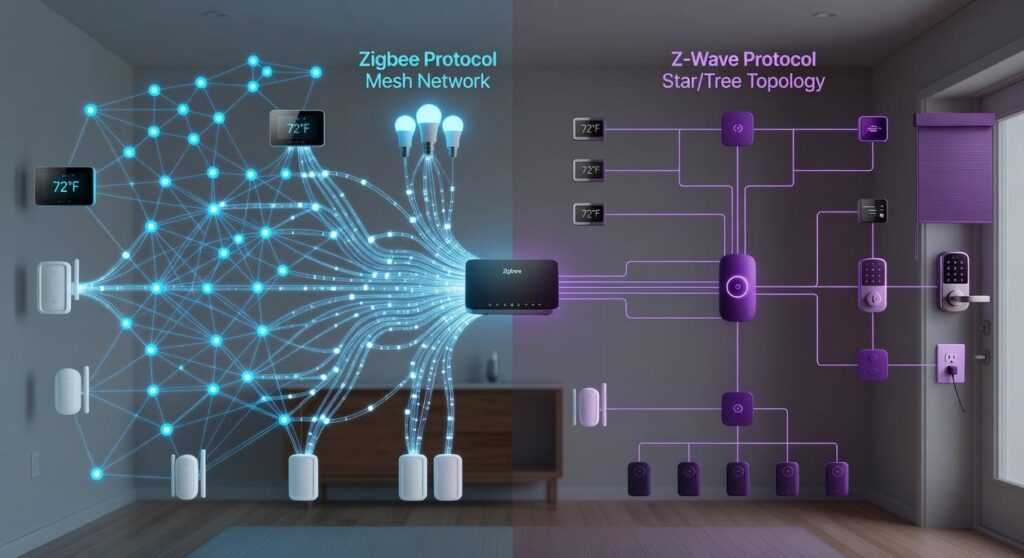
- Compare Alternatives – Zigbee and Z-Wave are reliable, critics say more mature—but mesh integrates directly with smartphones, NO EXTRA DONGLE required.
Pro tip: Always confirm firmware update support.
The Future Is Woven Together
Older smart home protocols often struggled with range limits and single points of failure; when one hub dropped, everything went dark. Bluetooth mesh networking solves this by allowing each device to relay signals across many paths, so commands hop reliably from bulb to switch to sensor. As a result, every added device strengthens coverage instead of straining it. For example, a smart lock at the garage can communicate through hallway lights to reach your phone. Critics argue Wi‑Fi alone is enough, yet mesh offers lower power use and greater resilience. Ultimately, it forms the fabric for seamless automation and beyond.
Build a Smarter, More Connected Home Today
You came here to better understand how modern home technology, automation protocols, and bluetooth mesh networking work together to create a seamless connected living experience. Now you have the clarity you need to move forward with confidence.
The real frustration isn’t the lack of devices — it’s getting them to communicate reliably, scale smoothly, and actually simplify your life. When your smart home systems don’t integrate properly, convenience turns into confusion.
The good news? With the right approach to automation protocols and device integration, you can eliminate connectivity gaps, improve performance, and future-proof your setup.
If you’re ready to stop guessing and start building a smarter, fully integrated home, explore our latest smart living guides and device integration tips now. Thousands of connected-home enthusiasts rely on our insights to stay ahead of evolving tech — and you can too. Start optimizing your smart home today.
 There is a specific skill involved in explaining something clearly — one that is completely separate from actually knowing the subject. Arthuron Grantielos has both. They has spent years working with home trends update in a hands-on capacity, and an equal amount of time figuring out how to translate that experience into writing that people with different backgrounds can actually absorb and use.
Arthuron tends to approach complex subjects — Home Trends Update, Device Integration Tips, Home Automation Protocols being good examples — by starting with what the reader already knows, then building outward from there rather than dropping them in the deep end. It sounds like a small thing. In practice it makes a significant difference in whether someone finishes the article or abandons it halfway through. They is also good at knowing when to stop — a surprisingly underrated skill. Some writers bury useful information under so many caveats and qualifications that the point disappears. Arthuron knows where the point is and gets there without too many detours.
The practical effect of all this is that people who read Arthuron's work tend to come away actually capable of doing something with it. Not just vaguely informed — actually capable. For a writer working in home trends update, that is probably the best possible outcome, and it's the standard Arthuron holds they's own work to.
There is a specific skill involved in explaining something clearly — one that is completely separate from actually knowing the subject. Arthuron Grantielos has both. They has spent years working with home trends update in a hands-on capacity, and an equal amount of time figuring out how to translate that experience into writing that people with different backgrounds can actually absorb and use.
Arthuron tends to approach complex subjects — Home Trends Update, Device Integration Tips, Home Automation Protocols being good examples — by starting with what the reader already knows, then building outward from there rather than dropping them in the deep end. It sounds like a small thing. In practice it makes a significant difference in whether someone finishes the article or abandons it halfway through. They is also good at knowing when to stop — a surprisingly underrated skill. Some writers bury useful information under so many caveats and qualifications that the point disappears. Arthuron knows where the point is and gets there without too many detours.
The practical effect of all this is that people who read Arthuron's work tend to come away actually capable of doing something with it. Not just vaguely informed — actually capable. For a writer working in home trends update, that is probably the best possible outcome, and it's the standard Arthuron holds they's own work to.