Walk into any modern home today and you might not immediately notice what makes it feel so seamless, intuitive, and elevated. That’s the point. The real transformation is happening behind the scenes, through hidden tech in home decor that blends beautifully with your space while quietly enhancing how you live.
If you’re searching for ways to upgrade your home without sacrificing style, this article is designed for you. We’ll explore how smart interior innovations, subtle automation features, and discreet device integrations are reshaping everyday living—without cluttering your aesthetic.
Our insights are grounded in ongoing analysis of emerging home trends, hands-on testing of connected devices, and close monitoring of evolving automation protocols. We focus on what actually works in real homes, not just what looks impressive in a showroom.
By the end, you’ll understand how to incorporate smart solutions that feel intentional, elegant, and future-ready—while keeping your decor clean, cohesive, and effortlessly modern.
Start with Invisible Infrastructure
First, define smart integration as embedding sensors and systems into walls, lighting, or furniture so they disappear. Instead of scattering gadgets, hardwire Wi-Fi access points into ceilings and use paintable in-wall speakers. For example, motorized shades synced to daylight sensors (which adjust automatically) cut energy use by up to 20%, according to the U.S. Department of Energy. Next, choose unified protocols like Matter (a shared device language) to reduce clutter. Finally, prioritize hidden tech in home decor with flush mounts and concealed charging drawers. Pro tip: map wiring before renovations begin. Plan for future upgrades too.
The First Principle: Blending Technology with Aesthetics
Great design doesn’t shout; it whispers. And increasingly, the smartest homes are the ones where you can’t see the tech at all.
Invisible Audio Solutions
First, consider sound. In-wall and in-ceiling speakers distribute audio evenly without cluttering shelves or floors. Meanwhile, picture frame speakers and lamp speakers double as décor, proving that hidden tech in home decor isn’t a gimmick—it’s a design philosophy. (No one ever said, “I wish my living room had more visible wires.”) Looking ahead, it’s reasonable to speculate that fully plaster-integrated speakers—completely seamless beneath finished walls—will become mainstream as material science improves.
Hidden Screens and Displays
Then there are displays. Smart mirrors reveal news and weather only when activated. Motorized TV lifts conceal screens inside consoles or ceilings. Ultra-short-throw projectors paired with ambient light rejecting screens create cinematic scale without a black rectangle dominating the room. Some critics argue that hiding screens encourages overconsumption of media. However, thoughtful concealment can actually promote intentional use—technology appears only when invited.
Intelligent Lighting Design
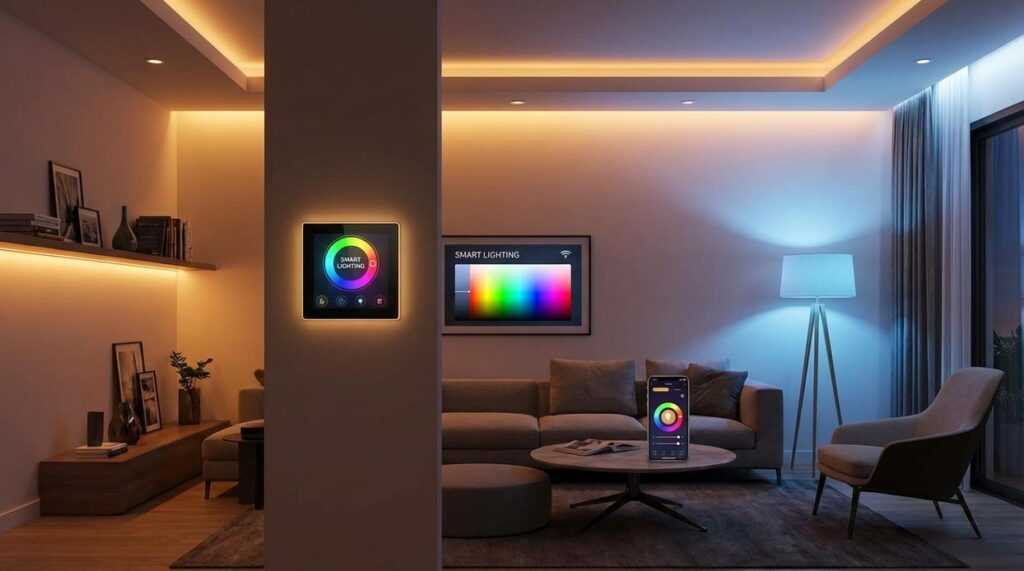
Beyond smart bulbs, programmable LED strips in coving, under cabinets, and along staircases sculpt architecture with light. Over time, expect AI-driven lighting scenes that adapt automatically to mood and circadian rhythms (clearly speculation, but plausible).
Sensors that Disappear
Finally, flush-mount, paintable motion and climate sensors reduce visual noise—because intelligence should be felt, not seen.
The Core of a Connected Home: Automation and Protocols
A truly connected home doesn’t start with gadgets. It starts with protocols—the communication languages devices use to talk to each other. Wi‑Fi (cloud-based systems) relies on internet servers to process commands. That’s convenient, but if your internet drops, so does control (and sometimes privacy). Local protocols like Zigbee, Z-Wave, and Matter operate within your home network, meaning faster response times and greater reliability. Matter, for example, is a universal standard designed to let devices from different brands work together seamlessly—something competitors often gloss over when pushing single-brand ecosystems.
Creating “Scenes,” Not “Tasks”
Most homeowners think in single actions: turn on a light. A scene combines multiple actions into one command. “Movie Night” could dim lights, lower shades, adjust the thermostat, and power on speakers simultaneously. It’s the difference between flipping switches and conducting an orchestra. If you’ve explored how smart lighting systems transform interior spaces, you’ve already seen how lighting becomes foundational to these scenes.
The Power of Routines
A routine is automation triggered by time or behavior. A “Good Morning” routine might gradually brighten lights, raise blinds, and play the news at 7:00 a.m. Pro tip: anchor routines to natural cues—sunrise or motion detection—rather than fixed times for flexibility.
Voice vs. Ambient Control
Voice assistants feel futuristic (very sci‑fi captain-on-the-bridge energy), but constant commands can become tedious. Ambient automation—using sensors, schedules, and hidden tech in home decor—anticipates needs without prompts. Critics argue this reduces control. In reality, it enhances it: fewer commands, smarter responses, and a home that works quietly in the background.
Room by Room: Practical Integration Blueprints
The Kitchen
The modern kitchen is a command center. Integrated smart appliances—like refrigerators with internal cameras and inventory tracking—reduce food waste by alerting you when items expire (the USDA estimates up to 30–40% of the U.S. food supply is wasted annually). Under-cabinet smart screens display recipes, stream tutorials, and sync with calendars, keeping counters clutter-free. Voice-controlled faucets improve hygiene by minimizing touchpoints, while leak detection sensors under sinks send real-time alerts to your phone at the first sign of moisture. Pro tip: Place sensors near both the P-trap and supply lines for full coverage.
The Living Room
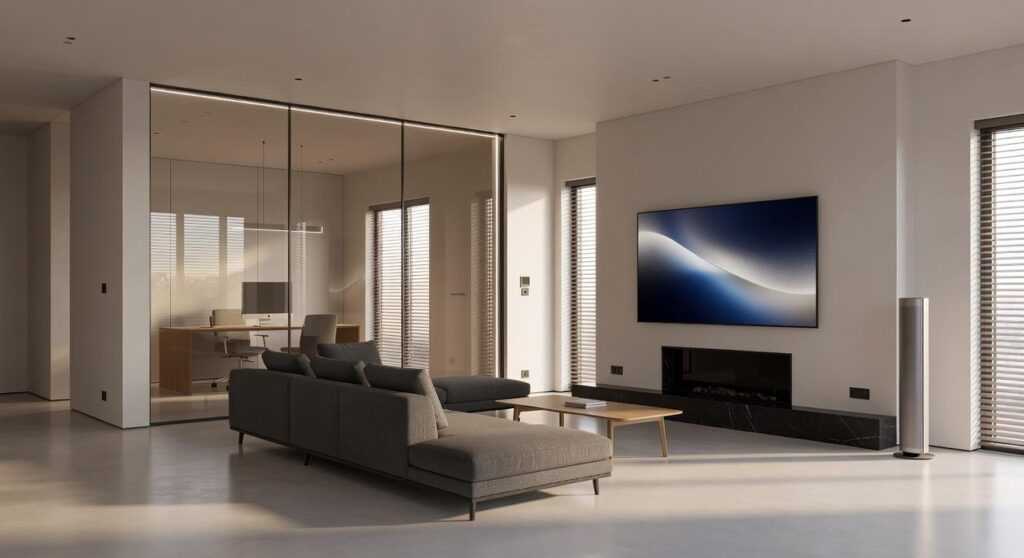
This is where design meets performance. Hidden audio systems and recessed motorized projectors preserve clean sightlines while delivering cinematic sound. Smart blinds that adjust based on the sun’s position (using light sensors or geo-coordinates) protect furniture from UV damage and regulate temperature, potentially lowering cooling costs. It’s the subtle magic of hidden tech in home decor—technology present, but never shouting for attention (because nobody wants their speaker system to look like a 2005 sci-fi set).
The Bedroom
Prioritize recovery. Circadian rhythm lighting—lighting that shifts color temperature to mirror natural daylight cycles—supports melatonin production and better sleep (Harvard Health notes blue light exposure can suppress melatonin). Smart mattresses track sleep stages and heart rate, while blackout smart blinds seal out early-morning glare for uninterrupted rest.
The Bathroom
Smart mirrors with embedded displays provide weather, news, and skin analysis. Heated floors on a preset schedule eliminate cold-tile shock. Voice-controlled digital showers remember your exact temperature preference—no fiddling required, just consistency and comfort.
Future Proofing Your Smart Home Investment
During construction or renovation, run Cat6 ethernet and neutral wires to key spots—TV walls, ceilings, doorways, and hubs. Even if unused today, these lines prevent tear-outs later (future you will be grateful). Think of wiring as infrastructure: invisible, but CRITICAL to flexibility.
When choosing devices, pick a protocol, not a brand. A protocol is the shared language devices use to communicate. Matter is a universal standard backed by players, reducing lock-in risk.
Prioritize modular systems you can expand Swappable hubs and firmware updates keep hidden tech in home decor adaptable. Pro tip: label cable.
Your Blueprint for an Intelligently Designed Home
A few years ago, I wired my living room like a tech showroom—sensors everywhere, glowing hubs, tangled cords (it felt more sci‑fi than serene). Guests were impressed; I was exhausted. That’s when I realized the goal isn’t more tech. It’s better integration.
In other words, you no longer have to choose between beauty and intelligence. The real win is seamless, invisible automation—think hidden tech in home decor that works quietly in the background.
Why does this approach succeed?
- Automation protocols first, gadgets second
- Design that guides device placement
- One routine automated at a time
So, start small. Pick one room. Simplify one daily habit. Then build from there.
Bring Smarter Living Into Every Corner of Your Home
You came here looking for practical ways to blend innovation with comfort — and now you’ve seen how modern trends, smart interior upgrades, and seamless device integration can transform the way you live. From automation protocols to intuitive connected systems, you have a clearer roadmap for turning everyday spaces into efficient, responsive environments.
The real frustration isn’t a lack of technology — it’s cluttered gadgets, incompatible systems, and designs that sacrifice style for function. Today’s solutions prove you don’t have to choose. With the right approach to hidden tech in home decor, you can enjoy a beautifully styled home that works intelligently behind the scenes.
Now it’s time to take action. Start by auditing one room, identify where automation can simplify daily routines, and integrate devices that communicate seamlessly. If you’re ready to eliminate tech chaos and create a streamlined, future-ready home, explore our expert-backed guides and integration tips trusted by connected-living enthusiasts everywhere. Your smarter, more effortless home starts today.
 Jennifer Burnsivino is the kind of writer who genuinely cannot publish something without checking it twice. Maybe three times. They came to insightful reads through years of hands-on work rather than theory, which means the things they writes about — Insightful Reads, Home Automation Protocols, Smart Interior Innovations, among other areas — are things they has actually tested, questioned, and revised opinions on more than once.
That shows in the work. Jennifer's pieces tend to go a level deeper than most. Not in a way that becomes unreadable, but in a way that makes you realize you'd been missing something important. They has a habit of finding the detail that everybody else glosses over and making it the center of the story — which sounds simple, but takes a rare combination of curiosity and patience to pull off consistently. The writing never feels rushed. It feels like someone who sat with the subject long enough to actually understand it.
Outside of specific topics, what Jennifer cares about most is whether the reader walks away with something useful. Not impressed. Not entertained. Useful. That's a harder bar to clear than it sounds, and they clears it more often than not — which is why readers tend to remember Jennifer's articles long after they've forgotten the headline.
Jennifer Burnsivino is the kind of writer who genuinely cannot publish something without checking it twice. Maybe three times. They came to insightful reads through years of hands-on work rather than theory, which means the things they writes about — Insightful Reads, Home Automation Protocols, Smart Interior Innovations, among other areas — are things they has actually tested, questioned, and revised opinions on more than once.
That shows in the work. Jennifer's pieces tend to go a level deeper than most. Not in a way that becomes unreadable, but in a way that makes you realize you'd been missing something important. They has a habit of finding the detail that everybody else glosses over and making it the center of the story — which sounds simple, but takes a rare combination of curiosity and patience to pull off consistently. The writing never feels rushed. It feels like someone who sat with the subject long enough to actually understand it.
Outside of specific topics, what Jennifer cares about most is whether the reader walks away with something useful. Not impressed. Not entertained. Useful. That's a harder bar to clear than it sounds, and they clears it more often than not — which is why readers tend to remember Jennifer's articles long after they've forgotten the headline.