
The idea of a smart home once meant a voice assistant and a few connected lights. But as we look ahead, future homes 2035 predictions point to something far more transformative. Today’s reality—fragmented apps, incompatible devices, and constant notifications—creates more stress than convenience. This article moves beyond isolated gadgets to outline a cohesive, expert-driven vision of the 2035 home: a unified ecosystem built around proactive wellness, sustainability, and adaptive living. Drawing on emerging automation protocols, connected design principles, and integration best practices, we’ll explore how tomorrow’s homes will think ahead, simplify daily life, and operate as one intuitive environment.
The Ambient OS: Your Home’s Invisible, Predictive Brain
For years, smart homes have been reactive. You say, “Turn on the lights,” and they obey. Useful? Absolutely. Intelligent? Not quite. The next evolution shifts from command-based control to anticipation. Instead of waiting for instructions, your home will learn your routines, track time-of-day patterns, and interpret subtle biometrics (biometrics meaning measurable physical signals like voice tone, gait, or heart rate). In other words, the house won’t wait for you—it will already know.
This shift depends on a Unified Control Layer, often described as a “Home OS.” Think of it as the operating system for your living space, similar to how iOS or Android runs your phone. Lighting, HVAC (heating, ventilation, and air conditioning), security, and entertainment systems communicate on one seamless platform. Brand compatibility becomes irrelevant because the system translates between devices automatically. If you’ve ever struggled with five different apps just to dim the lights (we’ve all been there), this solves that problem directly.
At the same time, edge computing changes where intelligence lives. Instead of sending sensitive data to distant cloud servers, processing happens locally on a home hub. That means faster response times and stronger privacy safeguards. Pro tip: when evaluating future-ready systems, look for local processing capabilities first.
Finally, personalization scales. Your home recognizes who walks in by gait or voice and adjusts lighting warmth, temperature, and ambient sound instantly. These future homes 2035 predictions suggest spaces that feel less programmed and more intuitive—like a butler who never sleeps, but also never intrudes.
The Home as a Guardian: Proactive Health and Wellness Integration
By 2035, the healthiest person in your household might be… your house. As part of future homes 2035 predictions, designers envision living spaces that actively protect and optimize human well-being rather than simply provide shelter.
Circadian Lighting Systems
Circadian lighting refers to illumination that mimics the natural progression of daylight. In practice, this means cooler, blue-enriched light in the morning to stimulate cortisol (the hormone that boosts alertness), and warmer, amber tones in the evening to encourage melatonin production for sleep (yes, your ceiling will know it’s bedtime). Studies show that dynamic lighting can improve sleep quality and daytime focus (Harvard Health Publishing). The benefit? Better energy, sharper thinking, and fewer 3 p.m. crashes.
Atmospheric Monitoring
Integrated air and water sensors will continuously measure particulate matter (PM2.5), volatile organic compounds (VOCs), humidity, and microbial contaminants. When levels rise, smart filtration activates automatically. The EPA links indoor air pollutants to respiratory issues and fatigue—so proactive purification means fewer allergens, fewer headaches, and cleaner hydration without manual testing.
Non-Intrusive Biometric Tracking
Embedded sensors in beds and bathroom fixtures will track heart rate variability, sleep cycles, and hydration levels—no wearables required. These systems translate raw data into actionable health insights (subtle nudges, not sci-fi surveillance), helping homeowners catch patterns early and adjust habits before small issues escalate.
Hyper-Efficiency: The Self-Sustaining, Energy-Positive Home

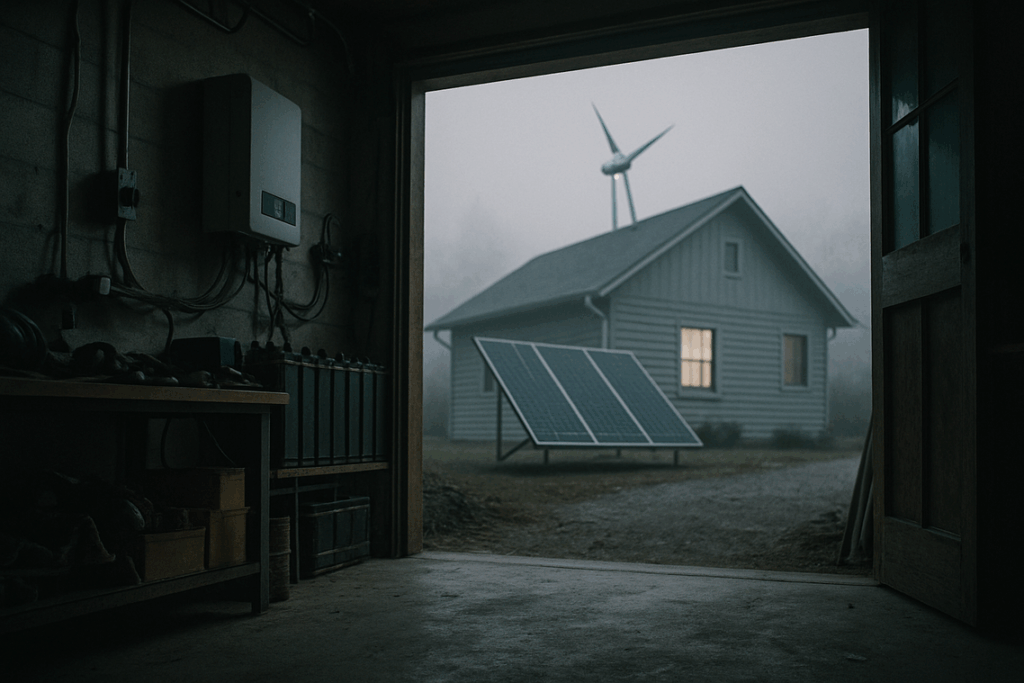
Imagine a home that doesn’t just consume energy—it produces more than it needs. In practical terms, an energy-positive home generates surplus power through solar arrays, stores it in integrated home batteries, and uses bidirectional charging (technology that lets power flow both to and from an electric vehicle). As a result, your EV becomes a backup battery. When production exceeds demand, excess electricity can be sold back to the grid through net metering programs (policies that credit homeowners for surplus energy) [U.S. DOE].
However, some critics argue battery systems are expensive and slow to pay off. That’s fair—upfront costs can be high. Yet prices for lithium-ion storage have dropped nearly 90% since 2010 [BloombergNEF], making payback periods increasingly realistic.
Meanwhile, AI-powered resource management ties everything together. By analyzing weather forecasts, time-of-use rates, and occupancy patterns, AI shifts heavy loads—like HVAC or laundry—to cheaper hours (quietly saving you money in the background). Pro tip: prioritize systems compatible with open automation protocols to avoid vendor lock-in.
Closed-loop water systems push efficiency further. Greywater recycling (reusing water from sinks and showers) combined with advanced filtration can cut household water use by up to 30% [EPA].
These innovations build on the evolution of smart homes from concept to reality and align closely with future homes 2035 predictions.
Dynamic Spaces: Adaptive Architecture and Robotic Interiors
I’m convinced the homes of tomorrow won’t just be smart—they’ll be shape-shifters. Transformable layouts will redefine what we call a “room.” Imagine robotic furniture that slides from the ceiling, modular walls that pivot on command, and a living room that becomes a bedroom in under a minute (goodbye, clunky sofa beds). In many future homes 2035 predictions, adaptability isn’t a luxury—it’s survival in smaller urban footprints.
Some critics argue this sounds gimmicky, like tech for tech’s sake. I disagree. When space costs a premium, flexibility becomes practical.
- Robotic beds that retract to reveal workspace
- Movable acoustic walls for privacy on demand
- AI-synced lighting that shifts with room function
Smart materials & surfaces will push things further. Self-healing paints reduce maintenance (finally), countertops double as touch displays and wireless chargers, and smart glass windows tint instantly for privacy or heat control. Skeptics worry about over-automation, but I’d trade static walls for responsive environments any day.
From Connected Devices to a Cohesive Living Experience
You set out to understand how connected devices evolve into something more meaningful—and now you can see the shift clearly. The real breakthrough isn’t adding more gadgets; it’s creating a home where technology disappears into the background and works in harmony with your life.
By embracing this integrated approach, you eliminate digital fragmentation and the frustration of juggling countless apps. Instead, one intelligent system adapts to you—supporting better health, greater efficiency, and effortless comfort.
The next step is simple: start aligning your devices under one cohesive ecosystem built for future homes 2035 predictions. Don’t settle for scattered tech. Choose a smarter, unified living experience today.
 Thalira Rothwynd writes the kind of smart interior innovations content that people actually send to each other. Not because it's flashy or controversial, but because it's the sort of thing where you read it and immediately think of three people who need to see it. Thalira has a talent for identifying the questions that a lot of people have but haven't quite figured out how to articulate yet — and then answering them properly.
They covers a lot of ground: Smart Interior Innovations, Connected Living Basics, Home Trends Update, and plenty of adjacent territory that doesn't always get treated with the same seriousness. The consistency across all of it is a certain kind of respect for the reader. Thalira doesn't assume people are stupid, and they doesn't assume they know everything either. They writes for someone who is genuinely trying to figure something out — because that's usually who's actually reading. That assumption shapes everything from how they structures an explanation to how much background they includes before getting to the point.
Beyond the practical stuff, there's something in Thalira's writing that reflects a real investment in the subject — not performed enthusiasm, but the kind of sustained interest that produces insight over time. They has been paying attention to smart interior innovations long enough that they notices things a more casual observer would miss. That depth shows up in the work in ways that are hard to fake.
Thalira Rothwynd writes the kind of smart interior innovations content that people actually send to each other. Not because it's flashy or controversial, but because it's the sort of thing where you read it and immediately think of three people who need to see it. Thalira has a talent for identifying the questions that a lot of people have but haven't quite figured out how to articulate yet — and then answering them properly.
They covers a lot of ground: Smart Interior Innovations, Connected Living Basics, Home Trends Update, and plenty of adjacent territory that doesn't always get treated with the same seriousness. The consistency across all of it is a certain kind of respect for the reader. Thalira doesn't assume people are stupid, and they doesn't assume they know everything either. They writes for someone who is genuinely trying to figure something out — because that's usually who's actually reading. That assumption shapes everything from how they structures an explanation to how much background they includes before getting to the point.
Beyond the practical stuff, there's something in Thalira's writing that reflects a real investment in the subject — not performed enthusiasm, but the kind of sustained interest that produces insight over time. They has been paying attention to smart interior innovations long enough that they notices things a more casual observer would miss. That depth shows up in the work in ways that are hard to fake.